Showing posts with label arusha. Show all posts

Saturday, November 17, 2007

Red Green Orange

The first set of traffic lights in town takes some getting used to. What do the lights mean? How do they work? What are cars supposed to do? We take them for granted, or curse them when we get too many reds in the 22 sets in the journey to work.


Arusha, with a population of 400,000, got its first set of traffic lights just last month. The Arusha Times reports on the wonder and confusion they created.

Like a gospel convention, thousands of Arushans every evening since October 9 have been attending the Sanawari intersection to witness what they believe to be a marvel of technology and Tanzania Road Authority's (Tanroad) "criminal negligence."

It appears that lights were installed at only three of the four aspects of the intersection, leaving cars entering from the fourth side to do what they will. There’s a recipe for confusion! A taxi driver commented:

What they have done is unbelievable. The traffic jam now goes about a kilometre each direction. Pedestrians and drivers are scared of being knocked down. What kind of technology is this?

In addition, there have been some problems getting the sequence right. There are times when all lights go red and all movement stops. Suddenly, they all go green and the whole intersection becomes chaotic.

An irate bus driver commented:

They have eyes but they do not see. If there are any engineers in the Municipal Council or Tanroads, which school did they attend? They should be charged with criminal negligence.

They are playing with people's lives. Had it not been for Traffic policemen who have been intervening, all day long, this junction would have been a pool of human blood.


For others however, the biggest problem of the traffic control lights is that they have been placed too close to two bus stands, a taxi docking area and a push cart station on the Sanawari road.

As if to put Tanroads to shame, pedestrians and drivers have catalogued an array of errors and that have been the dominant topic in Arusha for the past one week.

Like officialdom around the world, Arusha officals are passing the buck. The Municipal Council says Tanroads is responsible, and Tanroads says the relevant person is out of town.

In the mean time, Arusha locals have flocked in their thousands to stand and wonder at the operation of the marvellous new traffic lights. Drivers, pedestrians and even some of the traffic police men saw the lights as a mesmerising puzzle. "It is now green, in a few seconds it will be yellowish and then red and cars will stop," an elated man was heard telling scores of people who were just about to cross the road.

There's lots of local colour in this account of the first set of traffic lights in Arusha. I bet it's been a hot topic at the School of St Jude, in the playground and in the staffroom. I wonder how many of the St Jude's buses use that intersection?

Subscribe with Bloglines
Click here to subscribe to this blog.

Wednesday, July 18, 2007

Tuesday earthquake

NOTE: Updates at the end of this post.

The United States Geological Survey reports a series of earthquakes in the Arusha region.

The centre of the quakes is about 100km north west of Arusha. They have registered magnitudes of about 5 or 6. That's about equivalent to a 30 kiloton nuclear explosion, according to the British Geological Survey. As a comparison, the recent earthquake in Japan that killed 9, injured 900 and displaced 10,000 was magnitude 6.8.

I think I'll take a look on Google Earth and see what that part of the country is like. It may be part of a national park, or it may be farmland. I'd like to find out more about the impact of these earthquakes in northern Tanzania.

UPDATE: News reports note that the earthquake tremors have been felt in Nairobi, but there are no reports of personal injuries or property damage. The Global Disaster and Alert Coordination System has rated it an Orange Alert - i.e. 'medium'.

IRIN (18 July) has some more details here.

A look at Google Earth reveals that the earthquakes are in the Lake Natron region, around the volacno, Ol Doinyo Lengai, as seen on the left of the this picture (click to enlarge). Arusha is at the bottom, near Mt Meru, and the yellow line is the border with Kenya.


UPDATE: The Daily News reports (18 July):

A POWERFUL earthquake shook western Arusha city yesterday, causing buildings to sway and sending thousands of people fleeing into streets.

No damage or injuries were immediately reported from the tremor that measured 6.0 on the Richter scale. It occurred at around 5pm, just as people were going back home for the evening and night.

The Director General of the Tanzania Meteorological Agency, Dr Mohamed Mhita, confirmed the earthquake, the third in three days and after several years of inactivity in an area dotted by extinct and dormant volcanoes, including the Kilimanjaro, Africa’s highest peak. “The quake follows movements on the Great Rift Valley,” he added. The Valley is a fault line cutting through the middle of Africa from south to the Mediterranean Sea.

The quake was also felt in Nairobi and some parts of Dar es Salaam, he said. It lasted about a minute. The quake was also reported by the United States Geological Survey.

“A strong earthquake occurred this evening,” said Arusha Regional Police Commander, Basilio Matei over the phone. “I felt it myself in the office,” he added. The acting spokesman of the International Criminal Tribunal for Rwanda (ICTR), Mr Danford Mpumilwa, said that staffs were evacuated from the court’s building located at the Arusha International Conference Centre (AICC). ICTR is trying the key perpetrators of the 1994 genocide in Rwanda under a United Nations mandate.

Staff of the East African Community and private occupants of the building also scampered out as the powerful quake rattled the town, hub of the country’s northern tourist circuit. "This is the highest magnitude ever recorded in the region for very long," said Mr Walter Maeda, a hotelier, who was at the roof top of his hotel and saw tables “dancing”.

Monday, June 04, 2007

TED comes to Arusha

In January, I wrote about the TED conference which was to be hosted in Arusha. Well, it’s on now.


TED is a high-powered talk-fest that attracts the most powerful and influential people on the planet. While their core business is to showcase clever and creative ideas in technology, entertainment and design, in recent years they added heart to their mandate and have taken a humanitarian focus. This conference will be their first in Africa and 1200 delegates and speakers are expected.

I hope that a few of the delegates take the time to follow the famous jellybean buses of St Jude’s back to the school to check out Africa’s most successful project!

In the coming weeks, I’ll check the TED website to see if they have added any of the Arusha talks to the great selection of video presentations online.


Subscribe with Bloglines
Click here to subscribe to this blog.

Saturday, June 02, 2007

Rotary: Male, pale and stale?


Keely doesn't think so!

You may have read my posts here, here, here and here about the great work of Rotary International and the help they have given the School of St Jude. Have you wondered what the local Arusha Rotary Club does? Here are some interesting insights by Keely Stevenson.

She discusses some of the great work done by Rotary International, especially work to eradicate polio, then she draws comparisons between the context of Western philanthropy and African philanthropy.

Rotary is about fellowship. We meet weekly for lunch, learn from each other, and enjoy each other’s company. It has been a great way for me to understand the perspective of the Arusha business community. Our club also has many interesting projects, including the distribution of mosquito nets to prevent malaria, a rainwater harvesting project, a cataract surgery and more.

The connection [of African Rotarians] to poverty is many degrees closer than those Rotarians I met in Silicon Valley.

The African philanthropist likely sees the realities [of poverty] daily because his/her cousin, neighbor, employee, grandma, etc. is asking him/her directly for money to treat malaria, to pay for school fees, to get access to family planning services, to treat HIV, or to pay for food because lack of rainfall didn't yield good crops this season. All deserving cases for financial support from a charitable soul.

When we support the School of St Jude, we know we are making a massive difference to hundreds of children and their families. But it is not right up close against us, on our doorstep, in our back yard the way it is for Africans. We don't feel the impact of our assistance in the same way. We rely on news and letters and blogs from those who are close at hand.

So, I'm very glad for Keely's blog from Arusha -- it gives me another window into the context of life in Northern Tanzania. By the way, here's an amazing resource I just stumbled across. It is a collection of material about the history of Northern Tanzania, especially Arusha -- the personal scrapbook of David Marsh.

What wonderful trails there are to follow. The path just keeps leading us forward.

Note: Check out Mark Riffey's blog (April, 2007) on the topic of 'Male, pale and stale?' Rotarians.


Subscribe with Bloglines
Click here to subscribe to this blog.

Sunday, April 08, 2007

Famous for their jellybean buses

In Arusha most buses are banged up old rattle-traps. That makes the colourful buses of the School of St Jude really stand out – even though they are just old rattle-traps in disguise. Anthea, an Arusha local, notes –

The pupils of St Jude’s come from all over Arusha in buses. My children and I have counted 12 at a time, all marked with the school’s familiar logo, all a different colour – orange, red, green, pink – so that it looks as if somebody’s emptying a packet of jelly beans down the road.

In the February newsletter, the School announced that they have been able to buy two more buses thanks to a Rotary Matching Grant initiated in 2005 by 11 Rotary Clubs in Australia, Italy, Tanzania and USA. How is that for global action!

The grant was valued at $US25,000. This allowed the School to buy two second-hand buses, weld them back together, and fit them out with some new parts, brand new tyres and a lot of love.

Before the 'extreme make-over'

After welding them all back together, they needed a new paint job and so for an extra few hundred dollars they were painted purple and pink and had the Rotary symbol painted onto the driver’s door of both vehicles. The kids and staff LOVE them and already the buses are getting a good workout with each vehicle bringing over 60 students and staff to and from school each day.

Here are the drivers George and Henry - proudly standing near their new buses.


And here are the treasurer of the Rotary Club of Mt Meru, Bhavesh Gohil and immediate past president Ashik Nanabhai with the bus their club helped to fund.


These jelly bean buses provide more than reliable transport. They communicate the cheerful optimism of the School as it educates the future community leaders of Tanzania.

Make your contribution to the School through the ChipIn tool at the top of the page, or go to the School website to sponsor a bus and help cover ongoing maintenance and running costs.

As it is Easter, the School is on vacation. Well, except for the Standard 4 classes who will sit the national exam at the end of the year. They work through the holidays, studying hard so they can do well in the exams. In term time, these Standard 4 classes work six days a week, but during vacation time, they get Saturdays off!


Subscribe with Bloglines
Click here to subscribe to this blog.

Monday, February 26, 2007

What? Power blackouts again?

A report in the Arusha Times on 24 February shows the large impact that service failures can have poor countries like Tanzania.

Regular readers would know that the School of St Jude struggled to operate last year as the drought caused electricity rationing for 12+ hours a day. Since the rains at the end of the year the hydro-electric generation plants have come back on line and power has been restored.

Nevertheless, parts of the Central Business Area of Arusha have been in total darkness for the last two weeks. They have had no power because of a blown out transformer. Apparently TANESCO could not replace the transformer as it had none in store. ABB Tanelec has refused to sell it one because TANESCO could not also pay up-front and, although TANESCO is owned by the Tanzanian government, it is not credit worthy.

The power blackout is affecting businesses and essential services like schools and hospitals, and even the local radio station, Radio 5, has been off the air since 10 February. Just when meat vendors at the Central Market Place suffered a devastating blow due to an outbreak of Rift Valley Fever, those selling fish and chicken were restricted by the lack of power.


To Arusha residents and businesses the transformer failure is part of ongoing power problems. The town, despite the end of power rationing last December, still experiences daily power cuts.
In very poor countries, even important institutions like electricity companies struggle to provide basic services. Small things that go wrong can have major impacts that hold the country back, mired in the cycle of perpetuating poverty.

The School of St Jude bought two large new generators in 2006 to supplement the older ones it already had. It looks like these generators will be essential to the operation of the school for years to come.

Wednesday, February 21, 2007

What will we do this weekend?

Well, if you have gone to work at St Judes like many other long term volunteers, you might fancy a bit of sightseeing.

Rachel and Simon have described their recent weekend in the nearby Arusha National Park.

Simon says –

Arusha is actually quite close to most of Tanzania’s big game parks with Ngorongoro Crater and Lake Manyara about a 3 hour drive away, and the Serengeti beyond that. Generally you do these over 3 or 4 days in one ‘safari loop’ as its called locally. As we didn’t want to do 3-4 hours each day in the car, plus the safari time, we opted for the local quieter option which would still get us to see some of the animals but being only 30 minutes away, was also going to allow us to relax and enjoy ourselves.

Source: Simon

As you can see, the animals were just what you might hope to see!

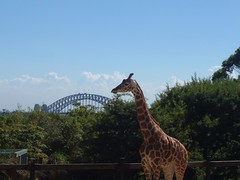
From where I am, it seems surreal to have these almost mythic African animals living so casually right on your doorstep. Here in Sydney, this is how I am used to seeing giraffes!

The giraffes at Taronga Zoo enjoy views of Sydney Harbour

The School of St Jude is located at the foot of Mt Meru which can be seen in this picture taken in the school grounds.

Source: Simon


Can you tell that I'm REALLY looking forward to our visit in September?


Subscribe with Bloglines
Click here to subscribe to this blog.

Thursday, February 01, 2007

UK continues budget support

The UK government has announced ongoing budgetary support for Tanzania.

Tanzania’s progress in tackling poverty provides an ‘excellent example’ for other African countries to follow, says Hilary Benn, the UK International Development Secretary.

Hilary Benn at the Chronic Poverty Research Centre

Speaking after a meeting with President Kikwete of Tanzania, Mr Benn pointed towards the development of democracy, economic growth and more effective government across Africa. He highlighted the progress in Tanzania, where:

  • The number of children in primary school has doubled from 4 million in 2000 to 8 million today. Almost all children are now in primary education, with 96% enrolment,
  • Infant mortality has fallen by a third (in the five years to 2004), and
  • There has been strong economic growth, with annual GDP increases of between 5% and 7% since 2000.
Mr Benn announced that the UK will provide £105 million of direct budget support to Tanzania in 2007/8, up from £90 million this year. Budget support is money provided directly to the Government of Tanzania to support its poverty reduction plans.

He said:
Tanzania is an excellent example of the progress Africa is making, with a constitutional democracy, economic growth above five percent a year, and nearly all children in primary education.

This aid from the UK government is equivalent to AU$7 per person, or AU$16 per child in Tanzania. This does not seem a lot of money, but it is valuable for three reasons:
  • It is a reliable amount that can be expected to continue annually and allow the Tanzanian government to do forward planning.
  • It is not tied to goods/services provided by the UK and therefore can be used to maximum efficiency, e.g. buying local goods and services.
  • It is given to budget support which allows the Tanzanian government to develop internal capacities and improved governance.

DFID is the UK Dept for International Development had lots of information about Ending Poverty.

Just as the reliable annual support from the British government will make a real difference as Tanzania climbs out of chronic poverty, so will your continuing support for the School of St Jude. By committing to give a regular amount, you will give the School income security that will allow it to provide excellent education to increasing numbers of bright children from poor families.

Wednesday, January 24, 2007

Book launch

Gemma Sisia makes ‘boundless energy’ look like an understatement! Not only does she run the school, plan and manage the building program, run her own household with two young boys, and fund raise, but she has also found the time and energy to write a book about it all. She’s a genuine force of nature!


‘St Jude’s’ will be published by Pan Macmillan in April 2007. Aussies should look out for Gemma’s whirlwind book launch tour in April, and everyone can get more info about the book here.

I am sure that the growing network of supporters will be delighted to get hold of the book and learn some of the more obscure details of Gemma’s life story. Growing up as the only girl with seven older brothers would fill a book all by itself!

Here is the provisional schedule.

Weekend 21/22 April: Arrive Sydney
Monday 23 April: Sydney - media interviews
Tuesday 24 April: Sydney - media interviews
Wednesday 25 April: ANZAC DAY - public holiday
Thursday 26 April: Brisbane - media interviews
Friday 27 April: Brisbane - media interviews
Monday 30 April: Melbourne - media interviews
Tuesday 1 May: Melbourne - media interviews
Wednesday 2 May: Adelaide - media interviews
Thursday 3 May: Perth - media interviews
Friday 4 May: return to Sydney

We are working on a get together in Sydney on 5 May for school supporters. I’ll keep you updated with details as they get firmed up. It will be so exciting to meet some of the many people who have made the School of St Jude the success that it is.

Tuesday, January 16, 2007

Africa: The Next Chapter

What better way to help a poor country like Tanzania than to give it some of your business? Arusha, with its excellent hotels and proximity to major tourist attractions (Serengeti and Mt Kilimanjaro) is well-placed to host international conferences. So it is great to see this conference scheduled for June 2007.


The TED (Technology, Entertainment, Design) conference is an annual event where leading thinkers and doers gather for inspiration. Titled ‘Africa, The Next Chapter’, the conference will feature 50 extraordinary speakers who are shaping Africa's future though innovation and world-changing ideas.

Underlying this new initiative is TED’s recognition that Africa is at an important tipping point. Its problems and challenges are well known. But across the continent, tremendous change is afoot. Ingenious solutions are being applied to tackle some of the toughest health and infrastructure problems; businesses are being launched that are capable of transforming the lives of millions.

A new generation of Africans is emerging who refuse to be daunted by Africa's familiar litany of challenges, and instead believe an exciting future beckons. They include leading entrepreneurs, inventors, cultural ambassadors, scientists, designers, artists, writers, activists, musicians and mavericks making real change across the continent.

Leading the conference is TEDGlobal Program Director Emeka Okafor: entrepreneur, analyst and creator of the influential blogs Africa Unchained and Timbuktu Chronicles.

You can find more information about the conference at TED.

I am sure that conference delegates will want to visit the School of St Jude as an outstanding example of the new energy that is contributing to the fresh wind of change in Africa.

Friday, January 12, 2007

Birdman of Arusha

Are you into birds? Since marrying Hal, my eyes have been opened to the obsessive qualities of serious birders as they make their lists and learn the subtle (obscure?) identifying features of different species. So, it is no wonder that birds will be an important feature of the visit we plan to make to Arusha later this year.

You can picture my delight at discovering the Birdman of Arusha.

James Wolstencroft, Birdman of Arusha

James Wolstencroft made his first East African safari in 1976 and settled in Tanzania in 2005 with his wife and two sons. He is a lifelong naturalist and very keen birder, whose enthusiasm for all forms of wildlife has encouraged an interest in many others, some of whom have become avid birders.

His website reflects his passion, knowledge and aesthetic appreciation of the natural world, especially birds.

Luckily for us John offers guided tours of all varieties. He says,

In my tours and writing I seek dialogue with nature. Where ecological insight and aesthetic appreciation meet; hopefully generating more rewarding experiences than quick looks and ticks on a list.

I hope that we can spend some time with this remarkable man, in the natural world that he knows so well. Who knows, maybe we will be lucky enough to see the critically endangered Beesley’s Lark – there are only 45 left in the world.


A visit to East Africa can be a richly rewarding experience. We hope to experience the wonders of the natural world, learn about the local people and culture, and make a contribution to the School of St Jude.